FAQ
Programme Background
Oral healthcare during the earliest stage of life is extremely important. Establishing appropriate lifestyles during pre-school years enables children to maintain lifelong oral and general health.
In the 2024 Policy Address, the Government introduced preventive dental services for pre-school children. The Outreach Oral Health Programme for Pre-school Children (OOHP) will launch on 1 September 2026, providing free oral health services to pre-school children in all kindergartens across Hong Kong, further strengthening oral health protection for pre-school children.
Kindergarten students aged 32 months and above (Including kindergartens and kindergarten-cum-child care centres)
Under the OOHP, the following services will be provided free of charge to participating students by organisations, as appropriate:
- Oral screening
- Oral health risk assessment
- Topical fluoride application as appropriate
- Screening report
- Individualised oral health home care advice for children with decayed teeth
- Referral service for students in need
Free oral health workshop for kindergarten teachers will also be provided to help teachers deliver oral health messages more effectively to their students and to encourage good lifestyle habits from an early age.
Enrolment in "Outreach Oral Health Programme for Pre-school Children" (OOHP)
All kindergartens in Hong Kong are invited to enrol in the OOHP. (Kindergartens means kindergartens and kindergarten-cum-child care centres registered with the Education Bureau under the Education Ordinance (Cap. 279))
Organisations providing services should contact their assigned kindergartens to introduce the OOHP and invite them to join. Kindergartens expressing interest to join the OOHP will receive service details and documents from the relevant organisations. In addition, organisations will schedule the date of OOHP Services with Participating Kindergartens.
Parents' FAQ
For parents who wish their children to participate in the OOHP, they can contact the kindergartens their children attend. The OOHP is a school-based programme. Parents do not need to contact the dental clinic or the programme office for enrolment.
The OOHP is free of charge. Eligible students may receive OOHP Services once a year.
Parents are encouraged to arrange regular oral health check-ups for their children and help them develop good dental care habits from an early age, so that tooth decay and other oral health problems can be detected early.
The OOHP is generally conducted within the school setting, and the administrative arrangements and preparatory work are not complex. The dental outreach team will arrange the service date and time with the school in advance to minimise disruption to lessons.
In general, parental accompaniment is not required. On the day of the outreach dental service, kindergarten teachers will accompany participating students throughout the process and provide appropriate support to ensure the smooth running of the service.
During oral screening, dentists or dental care professionals will apply topical fluoride as appropriate to children with parental consent. For children without tooth decay, sodium fluoride (NaF) varnish is generally recommended to help prevent tooth decay.
For children with cavitated tooth decay, treatment with silver diamine fluoride (SDF) is generally recommended to help arrest the tooth decay process. After SDF is applied to the decayed area, the affected part will turn black permanently. This is a normal phenomenon and indicates that the tooth decay has been arrested.
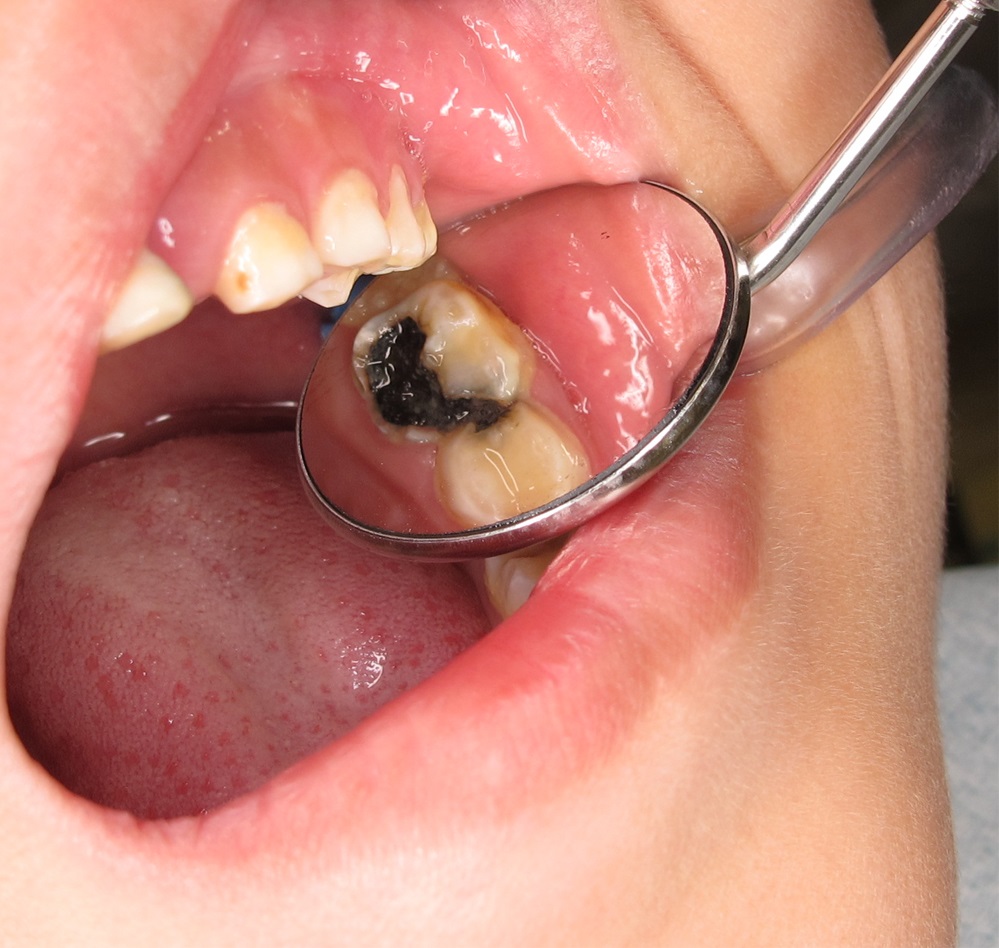
Dentists or dental care professionals will apply topical fluoride to children as appropriate, based on their professional judgement.
During oral screening, if cavitated tooth decay is found, the dentist or dental care professional will apply silver diamine fluoride (SDF) as appropriate, to student with parental consent to help arrest the tooth decay process.
After SDF is applied to the decayed area, the affected part will turn black permanently. This is a normal phenomenon and indicates that the tooth decay has been arrested.
Screening reports will be provided to parents. For children with cavitated tooth decay, the organisation providing service will offer parents individualised oral health home care advice. This will enable parents to help improve their children's oral health and lifestyle habits, thereby reducing the risk of future tooth decay.
If special oral health conditions are found, the dentist may contact the parents/guardians to explain the situation and offer recommendations. Furthermore, the dentist may, at his professional judgement, recommend or provide any appropriate examinations or treatments, including referral. Any services falling outside the scope of the OOHP Services is considered private arrangements at the own expense of the Programme Participant.
Topical Fluoride Agent
Over a century ago, fluoride was proven effective in preventing tooth decay. Today, fluoride is widely used in the field of dentistry. Common oral care products such as toothpaste, mouthwash and dental floss often contain fluoride.
Topical fluoride is a high-concentration fluoride product applied directly to the tooth surface. The fluoride ions combine with the tooth enamel to form a protective layer, which strengthens the teeth's resistance to acid and helps prevent and repair early-stage decay.
According to the 2021 Oral Health Survey Report from the Department of Health, over 40% of 5-year-old children have experienced tooth decay with an average of 2 teeth. Among these children, half have had decay in 4 or more teeth.
The World Health Organization (WHO) has included fluoride compounds in 《Essential Medicines List for Children》. Topical fluoride treatment is non-invasive which requires a short application time and the process is easy for children to accept.
Sodium Fluoride Varnish (NaF)
Sodium fluoride (NaF) varnish is a gel-like fluoride preparation applied to the surface of teeth and commonly used to prevent tooth decay. The treatment procedure is simple which involves only the application of the material onto the tooth surfaces using a small applicator.
The likelihood of experiencing side effects from sodium fluoride (NaF) varnish application is extremely low. However, the dosage must be determined and controlled by a dentist as excessive application may lead to dental fluorosis (white streaks or spots on the tooth surface).
Although extremely rare, if severe allergic reactions such as swelling of the mouth or tongue or difficulty breathing occur after receiving NaF treatment, the patient must seek medical attention immediately.
Individuals with a known allergy to Sodium Fluoride Varnish (NaF) or any of its ingredients are not suitable to receive NaF. The ingredients of NaF may include, but not limited to: ethanol, sodium fluoride and rosin.
Sliver Diamine Fluoride (SDF)
Silver diamine fluoride (SDF) is a clinically proven material effective in arresting the tooth decay process. Its main components are silver and fluoride. Silver effectively inhibits bacteria and fluoride strengthens the teeth.
The use of silver diamine fluoride depends on an individual's oral health condition and is primarily applied to baby teeth. The treatment procedure is simple which involves only the application of the solution onto the decayed area using a small applicator.
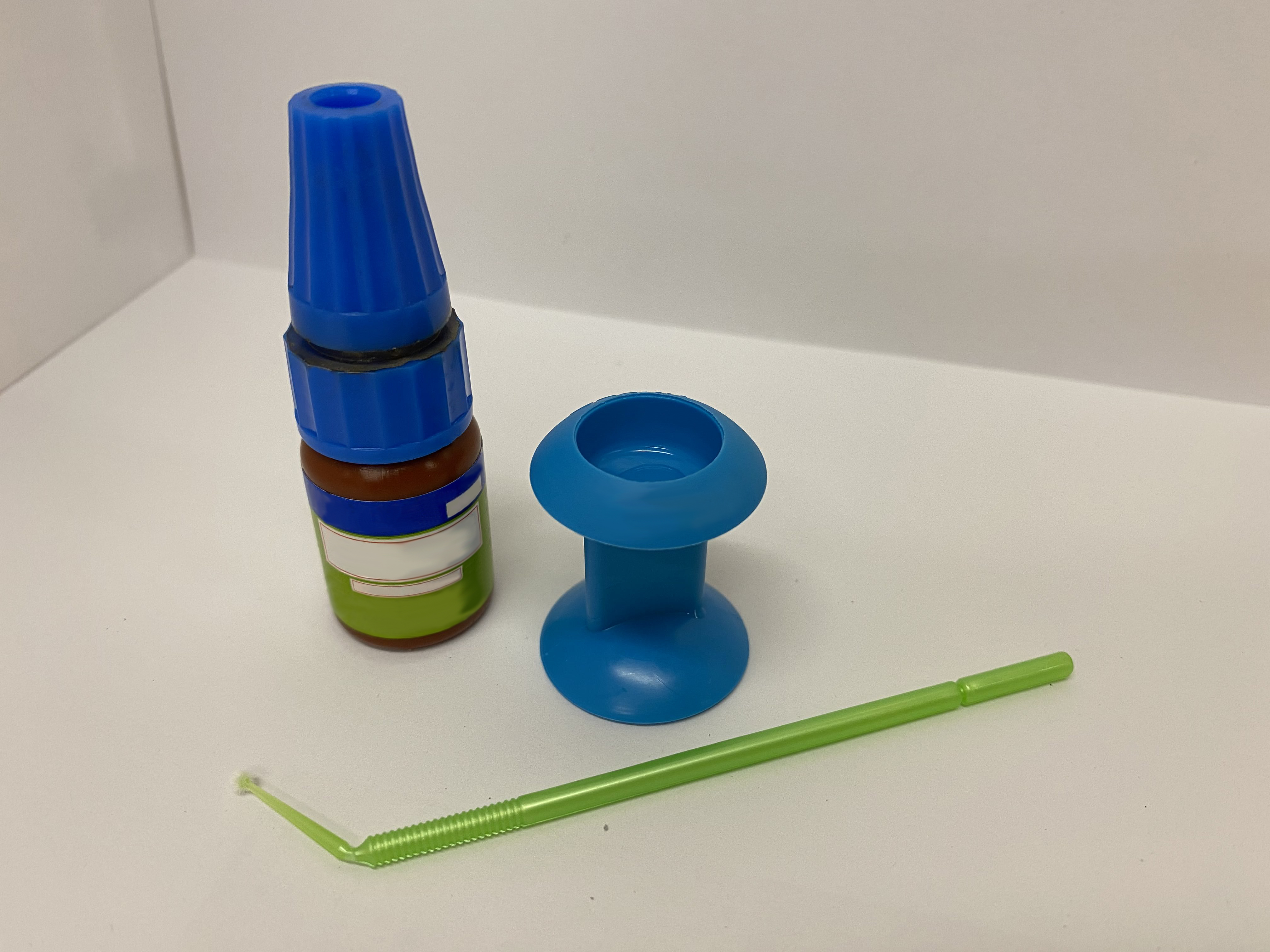 Silver Diamine Fluoride (SDF) solution
After application, the decayed tooth tissue will harden and permanently turn black.
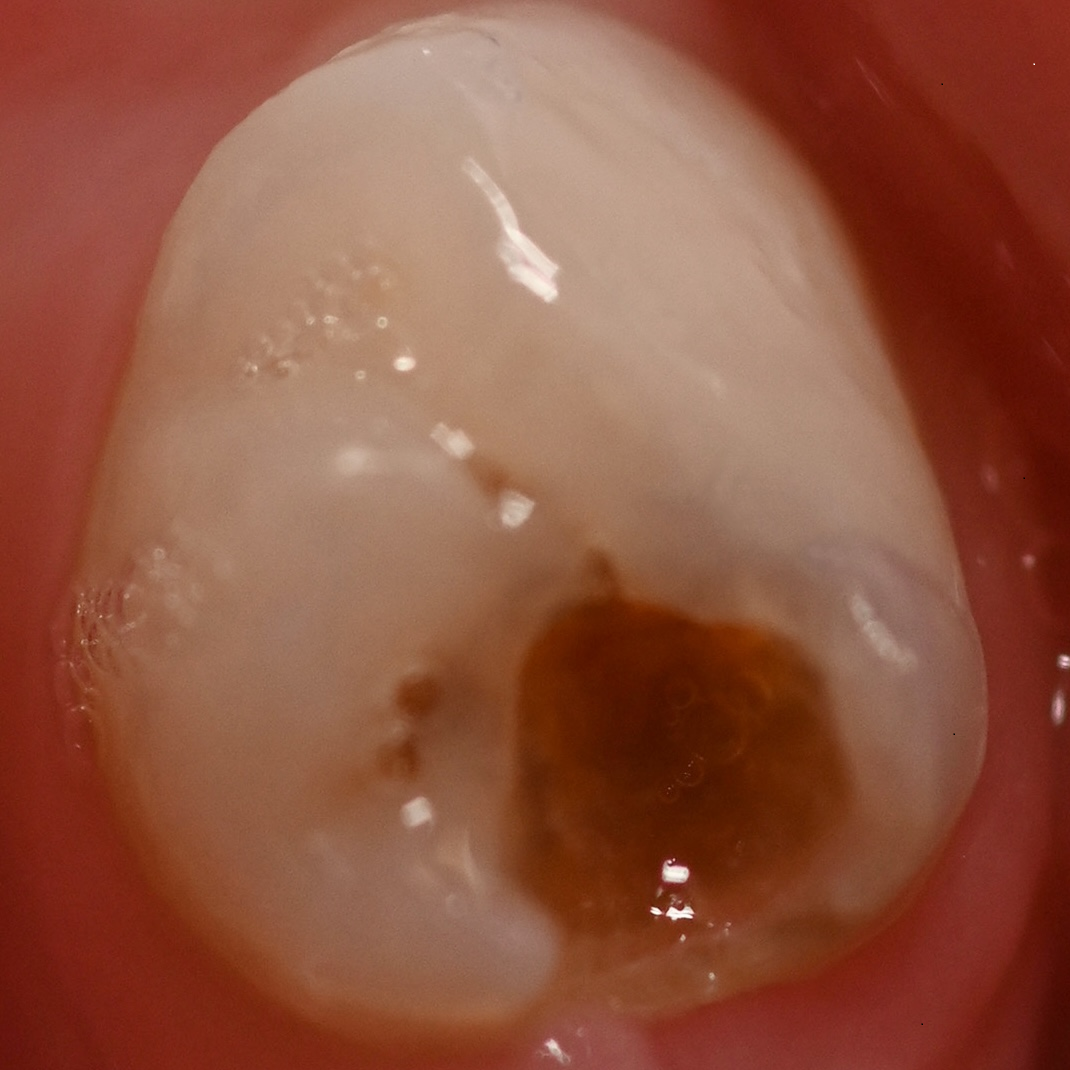 Before
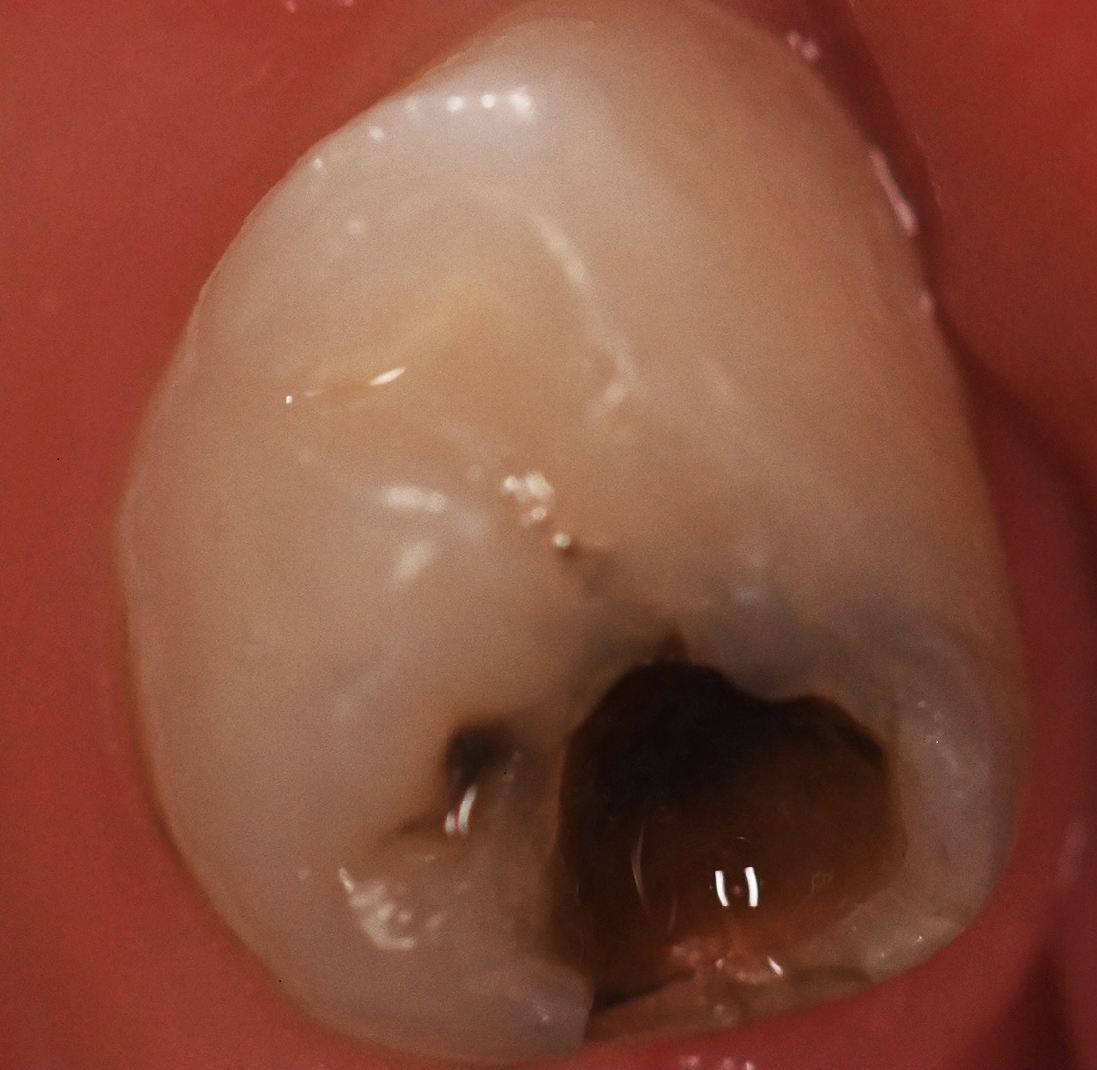 After
After
Children should adhere to the post-operative instructions provided by the dentist after receiving SDF treatment. They may notice a slight metallic taste in their mouth, which usually subsides within a few hours.
The application of SDF may cause mild discomfort and /or temporary grayish staining of the gums, oral mucosa or skin. These symptoms typically fade gradually within a few days. If they persist, please consult a dentist as soon as possible. If SDF accidentally stains the skin or gums, the stain cannot be washed off but will fade on its own within 1 to 3 weeks. However, stains on clothing or other surfaces may be permanent.
Although extremely rare, if severe allergic reactions such as swelling of the mouth/tongue or difficulty breathing occur after receiving SDF treatment, the patient must seek medical attention immediately.
Individuals who are allergic to Silver Diamine Fluoride (SDF) or any of its ingredients, or those who have mouth ulcers or painful wounds in the oral cavity are not suitable to receive silver diamine fluoride. The ingredients of SDF may include, but not limited to: silver metal, silver ions, ammonia, and fluoride.
Yes, there are. You may choose not to receive SDF. For information regarding other treatments for tooth decay, please consult a dentist. Untreated tooth decay may worsen and lead to serious consequences.